Is Reshoring Injection Molding Right for Your OEM?
Many injection molding problems begin long before production ever starts, but they may not become apparent until parts are running in production.
Issues like warping, cosmetic defects, inconsistent output, slow cycle times, unnecessary labor or secondary operations, and scaling challenges are often tied back to manufacturability decisions made early in development.
In many cases, the part itself is technically moldable. The bigger issue is whether it can be molded efficiently, consistently, and at the production volumes and part pricing the program actually requires.
This is why DFM reviews are critical.
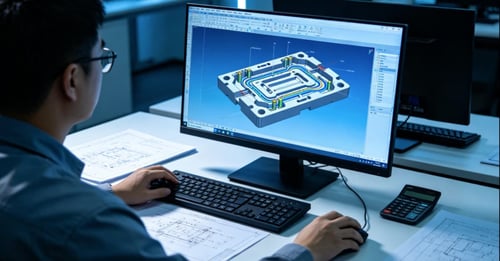
DFM, or Design for Manufacturability, is the process of evaluating how a part design will perform during real-world production. For injection molding, a DFM review helps manufacturers identify potential production risks, tooling concerns, material considerations, process inefficiencies, and scalability limitations early in development.
While many OEMs are already familiar with DFM at a high level, the impact of a thorough manufacturability review is often underestimated. A strong DFM process is not only about preventing defects. It is about improving long-term production stability, repeatability, and operational efficiency while helping avoid expensive tooling modifications or production issues later in the program lifecycle.
1. Identify Problems Before Tooling
Once tooling is built, design changes become significantly more expensive and, depending on how the tool was designed, sometimes impossible without major rework or rebuilding. Issues that could have been corrected during the design phase can quickly turn into tooling modifications, production delays, quality concerns, or ongoing process inefficiencies once production begins. DFM reviews help identify manufacturability concerns early while adjustments are still manageable and far less costly to correct.
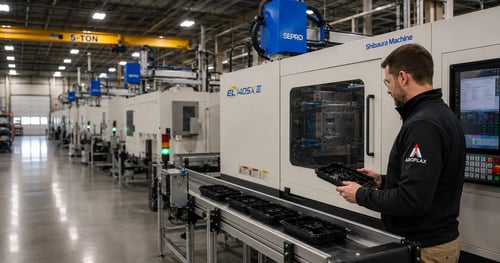
With injection molding, even small design decisions can create major downstream production impacts. Things like wall thickness transitions, draft angles, gate placement, rib design, shutoffs, texture requirements, cooling strategy, and part geometry all influence how consistently and efficiently a tool will perform once parts are running. At Aroplax, we look beyond whether a part can simply be molded. We evaluate how it will perform in real world production at OEM volumes, including repeatability, cycle efficiency, automation readiness, tooling longevity, and long term operational cost.
This is also not a knock against an OEM’s engineering team. Product engineers are often balancing aesthetics, functionality, certifications, assembly requirements, and overall product performance. A DFM review from an injection molding partner provides an additional manufacturing focused perspective from specialists who work with tooling, materials, automation, and high volume production every day. That second set of eyes can often identify tooling considerations, process inefficiencies, and long term production risks before they become expensive problems later.
2. Reduce Long-Term Cost Per Part
DFM is not only about preventing problems. It is also about improving efficiency. A proper DFM review often uncovers opportunities to reduce production costs without compromising part quality or performance. In many cases, small design, material, or tooling adjustments can create long term savings over the life of a production program.
For high volume OEM production, even small improvements in cycle time, labor reduction, automation readiness, or scrap reduction can create significant long term cost savings. Features that simplify processing or eliminate unnecessary secondary operations may seem minor during development, but they can have a major impact once production scales.
In some cases, a more advanced tooling strategy upfront may actually help lower long term part cost by improving consistency, reducing labor requirements, and creating a more stable and efficient production process over time. At Aroplax, we evaluate tooling and manufacturability decisions through the lens of total operational performance, not just upfront tooling cost.
3. DFM Helps You Scale
A part that runs successfully in prototype or low volume production is not always optimized for long term high volume manufacturing. As production volumes increase, things like manufacturing consistency, tooling durability, automation readiness, cooling efficiency, and process repeatability become increasingly important to maintain output, meet lead times, and support growing demand.
DFM reviews help evaluate whether a parts design can support long-term production growth before scaling becomes a problem. Decisions made early in development can directly impact how efficiently a program runs once demand increases and production volumes grow.
Many injection molders can successfully produce a part once. Far fewer can help OEMs produce that same part consistently at scale while maintaining quality, efficiency, and repeatability over millions of cycles. Proper DFM and tooling strategy can often help maximize the output and longevity of a single tool, reducing the need for additional tooling as demand increases. That is why scalability should be considered early, not after production challenges begin appearing.
4. Ensure You’re Using the Right Material
Many projects begin with a material already in mind, but a proper DFM review helps evaluate whether that material is truly the best fit for the application’s ambient conditions, target part cost, production environment, and overall manufacturing process. Material selection impacts far more than just part strength or appearance. It also affects manufacturability, cycle time, dimensional stability, long term durability, and overall production consistency.
Different materials behave very differently during injection molding. Shrink rates, flow characteristics, cooling behavior, moisture sensitivity, and even colorants can all influence how consistently a part performs in production. This is especially true with semi crystalline materials where certain pigments or additives may impact shrink characteristics and dimensional stability.
At Aroplax, material selection is evaluated through both a product performance and manufacturing perspective. In some cases, a material initially ruled out for one limitation may actually become the better overall solution once the design is optimized, and things like additives, fillers, coatings, or stabilizers are considered. DFM reviews help OEMs evaluate these tradeoffs early so material selection supports both long-term product performance and manufacturing efficiency.
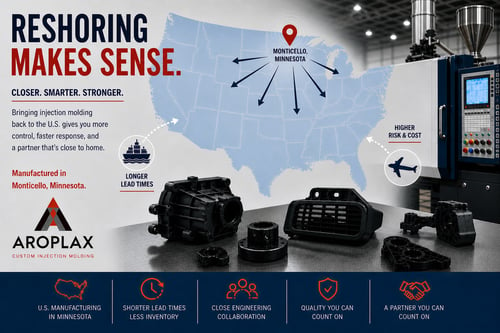
Aroplax is a Minnesota-based custom injection molding manufacturer services for OEMs across a wide range of industries. Our capabilities include custom injection molding, advanced tool design and strategy, in depth design for manufacturability support (DFM), engineering, prototyping, and material selection expertise.