Every Successful Tooling Project Starts with DFM
A design change in CAD is one thing. Making that same change after a mold has been built is another.
That's why the timing of manufacturing input can have such a significant impact on an injection molding project.
Part geometry, material selection, tooling strategy, tolerances, and production requirements are all connected. Decisions made during product development can influence manufacturing costs, production efficiency, quality, and long-term performance.
Involving an injection molding partner early gives engineering and manufacturing teams an opportunity to evaluate those decisions together before they carry into tooling and production.
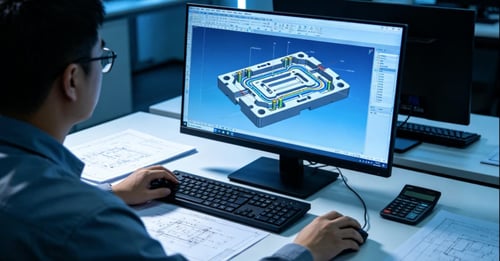
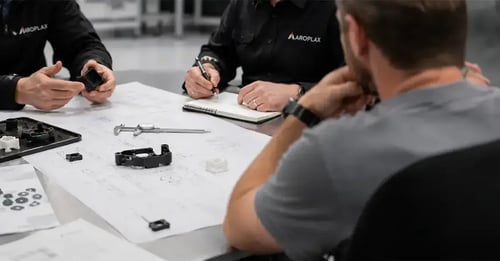
Early involvement doesn't necessarily mean bringing a molder into the project before a design exists. It could involve reviewing preliminary CAD, discussing material selection, evaluating prototypes, or performing a formal design for manufacturability (DFM) review before tooling begins.
The goal is to identify potential challenges and opportunities while there is still flexibility to make meaningful improvements.
What Can a Molding Partner Identify Before the Design Is Locked?
A component may meet its functional requirements on paper but still present challenges when it comes time to manufacture it consistently and efficiently.
Evaluating the design through a manufacturing lens can uncover how part geometry, material characteristics, tooling requirements, and production volumes influence the overall process.
1. Geometry That Could Create Molding Challenges
Wall thickness, transitions, draft angles, undercuts, ribs, bosses, and parting lines all influence how a component fills, cools, releases from the mold, and maintains dimensional consistency.
Certain features may create challenges related to warpage, sink, material flow, or part ejection. Others may require additional tooling complexity that could potentially be avoided through design adjustments.
Identifying these considerations before the design is finalized allows engineering and manufacturing teams to evaluate alternatives without compromising the component's intended function.
A formal DFM review can help identify these risks and opportunities before tooling begins.
Related Content: Why DFM Review Matters in Injection Molding
Identifying these considerations before the design is finalized gives engineering and manufacturing more room to evaluate potential changes against the part’s functional requirements.
A formal design for manufacturability review can help identify these considerations before tooling begins.
Related Content: Why DFM Review Matters in Injection Molding
2. Material and Design Decisions That Affect Each Other
Selecting the right resin involves more than identifying a material that meets the application's performance requirements.
Shrinkage, flow characteristics, stiffness, temperature resistance, moisture absorption, and other material properties influence how a component should be designed and manufactured.
A resin may perform well in the intended application but require changes to wall thickness, geometry, tolerances, or tooling to achieve consistent production results.
Evaluating the material and part design together allows teams to balance functional performance, manufacturability, material costs, and long-term production requirements.
Related Content: 5 Questions to Ask Before Before a Mold is Built
3. Tooling Decisions That Affect Long-Term Production Efficiency
Tooling strategy is another important consideration that can benefit from early manufacturing involvement.
Cavitation, gate locations, cooling, part ejection, tool construction, and automation requirements can all influence cycle times, production capacity, part quality, and long-term manufacturing costs.
These decisions become especially important for higher-volume OEM programs, where relatively small improvements in cycle time or material utilization can create meaningful savings over the life of the program.
For example, evaluating annual production volumes and projected demand early can help determine whether a higher-cavitation mold or a different tooling approach makes financial sense.
Rather than evaluating tooling strictly as an upfront investment, early collaboration allows OEMs to consider how the tool will perform throughout its expected production life.
Related Content: How DFM Leads to Better Tooling and More Efficient Manufacturing
4. Features That Could Create Unnecessary Secondary Operations
Some components require machining, tapping, hardware insertion, welding, assembly, or other secondary operations after molding.
While certain operations are necessary, others may be reduced or eliminated through changes to the part design or tooling strategy.
Features that would otherwise require machining may be incorporated directly into the molded component. Assembly requirements may also reveal opportunities for part consolidation, automation, or at-press operations.
Evaluating these possibilities during development can help reduce unnecessary handling, labor, and additional processing costs.
At Aroplax, we look beyond whether a component can be molded to identify opportunities to manufacture it more efficiently from start to finish.
The Costs of Finding a Same Problem Later
Finding a potential problem later doesn’t necessarily make the technical problem harder to solve, but it does mean more decisions and investments may already depend on the existing design.
For example: a geometry issue found during preliminary design might require a CAD revision. Find the same issue after the mold has been built, and the response may involve the part design, tooling, validation schedule, and production plan.
|
When an Issue Is Identified |
Potential Impact and Required Changes |
|---|---|
|
Preliminary Design |
Changes to part geometry, material selection, features, or assembly strategy can typically be evaluated with greater flexibility |
|
Before Tooling |
Design and tooling approaches can still be adjusted, although significant changes may affect project timelines |
|
During Tool Build |
Changes may require tooling modifications, rework, additional engineering, and increased costs |
|
During Validation |
Issues may require tooling adjustments, process development, additional sampling, or design revisions |
|
During Production |
Corrective actions may involve tooling modifications, process adjustments, additional inspection, or production interruptions |
The goal of early supplier involvement isn't to eliminate every potential challenge. It's to identify and address as many as possible before they affect tooling investments, production schedules, and long-term manufacturing performance.
What Information Makes an Early Manufacturing Conversation More Productive?
You don't necessarily need a production-ready design to start a useful conversation with an injection molder.
Providing some basic information about the component and its intended application can help the manufacturing team identify potential challenges and opportunities early in development.
Helpful information includes:
- Preliminary CAD models or drawings
- Intended application and functional requirements
- Critical dimensions and tolerances
- Expected loads and environmental exposure
- Material requirements or current material assumptions
- Expected annual production volumes
- Assembly and secondary operation requirements
- Quality or regulatory requirements
- Target production timeline
Not every detail needs to be finalized before starting the conversation.
The goal is to provide enough context for the molding team to understand how the component needs to perform, how it will be manufactured, and which decisions could influence the overall program.
When Is It Too Late to Bring in an Injection Molding Partner?
There's no specific point when it's too late to involve an injection molding partner, but the earlier manufacturing considerations are evaluated, the more flexibility there may be to make improvements.
Before tooling begins, there may still be opportunities to adjust part geometry, material selection, tooling strategy, or assembly requirements.
Once a mold has been built, the discussion may shift toward tooling modifications, process optimization, or addressing manufacturing challenges identified during sampling and validation.
For components already in production, an experienced molding partner can still provide value by evaluating quality concerns, improving existing processes, identifying cost-reduction opportunities, or assessing potential tooling transfers.
Early involvement provides the greatest flexibility, but manufacturing expertise can create value at any stage of a program.
Bring Manufacturing Into the Conversation Before the Design Is Finished
Successful injection molding programs start with more than a functional part design.
They require the right combination of material selection, tooling strategy, manufacturing processes, and production planning to achieve consistent quality and long-term efficiency.
Bringing your injection molding partner into the conversation early allows those considerations to be evaluated together, helping identify potential challenges, improve manufacturability, and make better decisions before significant tooling investments are made.
At Aroplax, we work with OEM engineering and product development teams to evaluate designs through a manufacturing perspective. Our design for manufacturability support considers how part geometry, materials, tooling, automation, and secondary operations can work together to support efficient, repeatable production.
Whether you're developing a new component or evaluating an existing design, early collaboration can help build a stronger foundation for long-term manufacturing success.
Have a part in development? Let's review it before tooling begins.
Aroplax is a Minnesota-based full-service custom injection molding manufacturer, supporting OEMs across a wide range of industries. Our capabilities include custom injection molding, advanced tool design and strategy, in depth design for manufacturability support (DFM), engineering, prototyping, and material selection expertise.